What Actually Happens During the Dry-Out Window
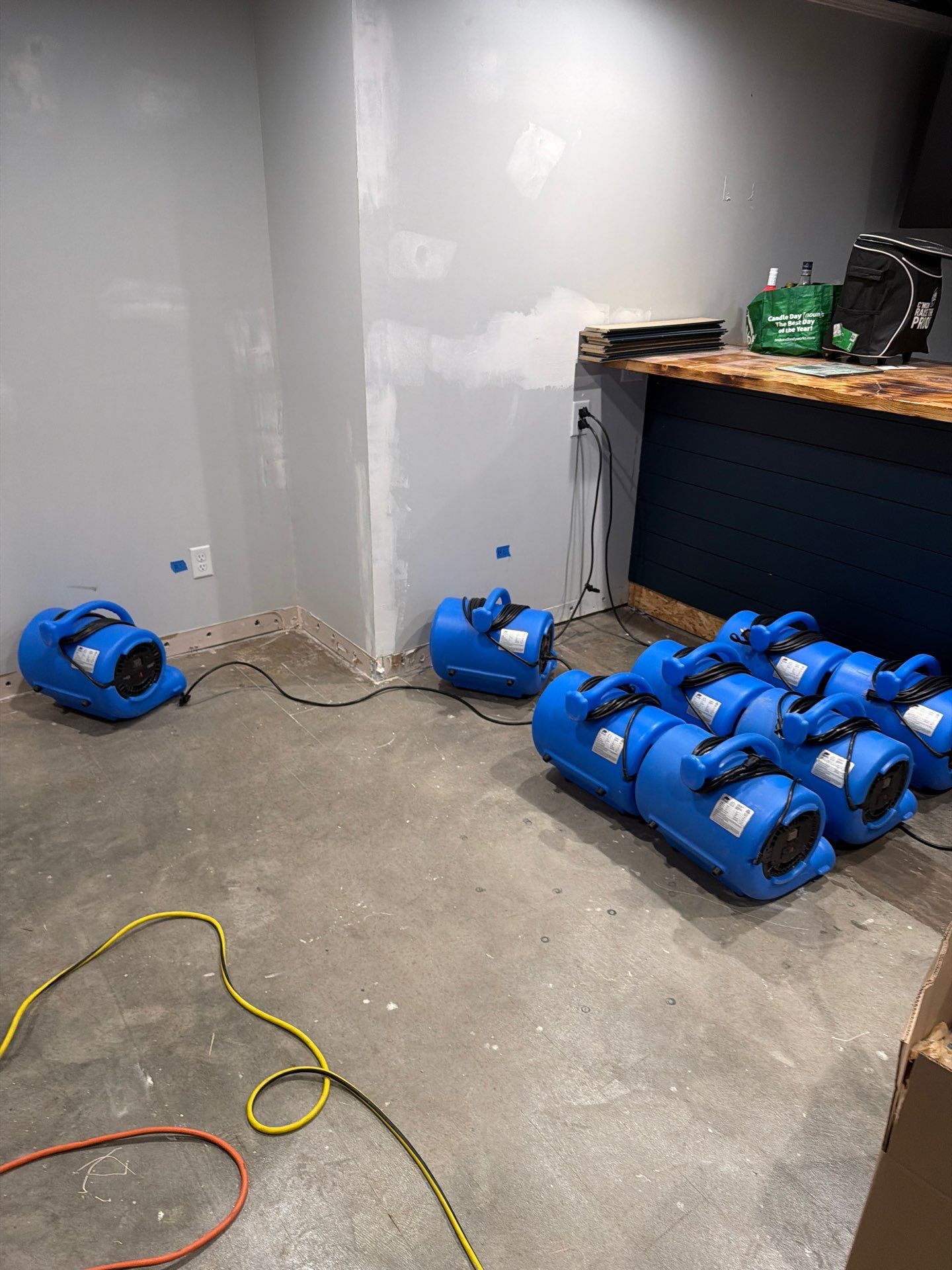
When our team arrives at your Lebanon property, usually within 2 hours of your call, the first 24 hours are the most active and the most important. Standing water gets extracted with truck mounted units, saturated padding under carpet often comes out, and we set up the air movers and dehumidifiers based on the cubic footage of affected space and the class of water intrusion. A small kitchen leak under the sink might need two air movers and one dehumidifier. A finished basement that took on several inches from a sump pump failure could require fifteen pieces of equipment running continuously. The equipment itself is loud, warm, and a little disruptive, and we will not pretend otherwise. It is also the reason your home dries in days rather than weeks.
During the second and third days, the bulk of the moisture is pulled from materials into the air, where the dehumidifiers capture it and drain it away. This is the part of the process that feels slow from the outside because nothing visually changes. The walls still look the same. The floor still feels cool. But our moisture meters are telling a different story underneath, and readings drop measurably with each visit. We come back daily, document the numbers, adjust equipment placement if a particular wall cavity is lagging, and keep you updated on whether we are tracking on schedule or running into a stubborn pocket.
The science behind this process is straightforward but easy to misunderstand. Air movers create high velocity airflow across wet surfaces, which lifts moisture into the air faster than it would evaporate on its own. Dehumidifiers then pull that moisture out of the air before it can re absorb into dry materials elsewhere in the home. Without dehumidification, all that evaporated water would simply migrate into your ceilings, your closet shelves, and the dry side of an interior wall, creating secondary damage that nobody wants. The balance between airflow and dehumidification is what separates a professional dry out from a homeowner running a couple of box fans and hoping for the best. That hopeful approach almost always ends in mold remediation a few weeks later, which costs significantly more than the original mitigation would have.
Why Some Dry-Outs Take Longer Than Others
Clean water from a supply line leak that you caught within a few hours dries fastest, often in three days flat. Once water sits for a day or two, it migrates further and saturates more porous materials, which extends the timeline. Plaster walls dry slower than drywall. Engineered hardwood holds moisture differently than solid oak, and we cover that nuance in our guide on hardwood floor water damage. Concrete and masonry in basements can take five to seven days because the material itself is dense and releases moisture slowly. Crawl spaces with poor ventilation can stretch even further.
The category of water matters too. Category 1 (clean water from a pipe or appliance line) follows the standard timeline. Category 2 (grey water from a washing machine or dishwasher) requires removal of more porous materials before drying can really begin, which adds a day or two. Category 3 (sewage or floodwater) means contaminated materials get removed entirely under different protocols, and drying happens on what remains, often a faster phase because so much affected material has already been hauled out. Outside temperature and humidity also play a role. A Lebanon home drying in humid summer weather may need an extra desiccant unit. The same home in dry winter air may finish a day early.
Hidden moisture is the other variable. When water tracks behind walls, under cabinets, or into a subfloor, our thermal cameras and probes find it, but reaching it sometimes means small inspection openings in drywall or temporarily removing a baseboard. We would rather find that hidden pocket on day one and treat it than have you discover staining or odor six weeks later. If you want more background on this part of the process, our piece on signs of hidden water damage walks through what we look for.
Building age plays a quiet but real role as well. Older Lebanon homes with lath and plaster, hardwood subfloors, and original framing tend to hold moisture longer than newer construction built with synthetic underlayments and engineered lumber. That is not a flaw, just a characteristic of how the materials behave. We adjust equipment counts and run times accordingly, and we explain the reasoning so you understand why your neighbor's identical sounding loss finished in three days while yours might need five. Every structure tells its own story through the moisture readings, and Lebanon Water Restoration treats each job as the specific puzzle it actually is rather than forcing a one size schedule on top of it.
What You Can Expect Day by Day
Day one is loud and busy. Crew members are extracting water, moving contents, setting equipment, and photographing everything for your insurance file. By the end of that first visit, your home is staged for drying and you have a written scope. Day two and day three are quieter. We stop in once daily, take readings in each affected area, and make small adjustments. Most homeowners stay in the home during this phase, though sleeping in a room next to running air movers is not for everyone. By day four or five, readings on most materials are at or near dry standard, equipment starts coming out room by room, and we do a final walkthrough to confirm everything matches the moisture levels of unaffected areas in your home.
Reconstruction (replacing drywall sections, reinstalling baseboards, refinishing floors) is a separate phase that follows drying and is not part of the dry out timeline itself. We coordinate that work or hand off to your preferred contractor, whichever you prefer. The key point is that the actual drying portion has a defined end, confirmed by numbers, and we will not leave equipment running longer than necessary just to pad an invoice. When the readings say done, we are done.
One thing worth mentioning is the role your insurance adjuster plays during this window. Most policies cover mitigation as an emergency service, and Lebanon Water Restoration bills directly to the carrier in the majority of Lebanon claims we handle. The daily moisture logs, photos, and equipment records we keep are exactly what adjusters need to approve the scope without back and forth delays. If your adjuster wants to walk the property mid dry out, we coordinate that visit so the equipment can be paused briefly for inspection. Clear documentation from day one is what keeps the claim moving and what protects you if any question comes up later about the extent of the loss or the work performed to address it.