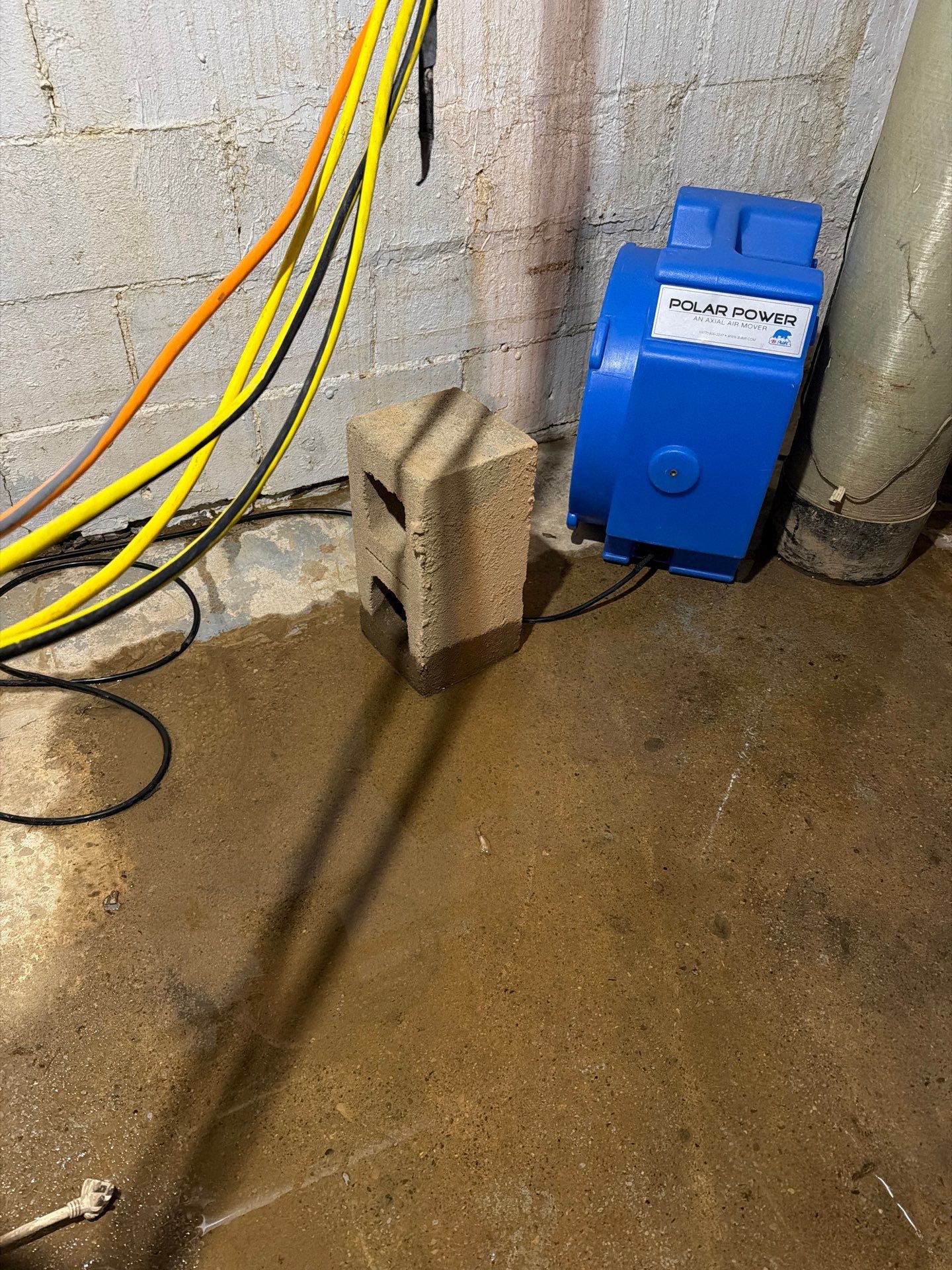
The free inspection itself is not a sales pitch dressed up as a service call. When our technician arrives at your Lebanon property, usually within 60 to 90 minutes of your first call during business hours and often faster during after-hours emergencies, the first thing they do is look at the source. A burst supply line under a sink behaves nothing like a sewage backup, and a slow ceiling leak from a second-floor bathroom tells a completely different story than a sump pump that gave up during a Tuesday night thunderstorm. Identifying the source determines the IICRC category of water you are dealing with, and that single classification drives almost every decision that follows, from whether materials can be saved to what your insurance carrier will and will not cover.
Category 1 water is clean, the kind you get from a supply line break or a fresh water heater leak, and the cost to restore tends to land between $1,500 and $4,500 for a typical room. Category 2, sometimes called grey water, comes from dishwashers, washing machines, or shower pans and carries enough contamination that porous materials usually have to go. Category 3 is the worst case, sewage or floodwater, and that is where homeowners need to be extra careful about what they touch and what they try to clean themselves. Our estimate spells out exactly which category you are dealing with and why, in plain language, so you understand what is driving the number on the page. If you want to read more about how these categories play out in real homes, our breakdown of water damage restoration cost walks through dozens of real scenarios.
What Actually Happens During the Free Inspection
The visible water is almost never the whole story. Drywall wicks moisture upward at roughly one inch per hour, which means by the time you see a wet baseboard, the wall cavity behind it may be holding water 18 inches up. Hardwood floors can look fine on top while the subfloor underneath is saturated. This is where the inspection becomes worth its weight in gold. Our technicians carry calibrated moisture meters, thermal imaging cameras, and hygrometers that measure the actual moisture content of materials and the relative humidity of the air around them. We map out the affected area, mark the dry line, and document everything with photos and readings that become the backbone of your insurance claim. If we suspect hidden damage behind walls or under flooring, we will tell you, and we will explain what it would take to confirm it without tearing the house apart. There is real value in knowing how water damage behind walls is found before it turns into a mold problem six weeks later.
A thorough inspection also looks beyond the obvious room. Water travels along the path of least resistance, which means a leak in an upstairs bathroom can show up in a downstairs closet two rooms away, riding along floor joists or following the electrical chase until it finds an exit. Our technicians check adjoining spaces, crawl into attics when the source is overhead, and pull back baseboards or quarter round in the rooms next door if the meters say something is off. We have found saturated insulation in Lebanon homes where the homeowner had no idea anything was wrong until we flagged a reading three rooms away from the original leak. Catching that secondary migration during the free inspection is often the difference between a four-day dry-out and a three-week reconstruction project.
After the moisture mapping comes the scope of work. This is where a lot of restoration companies in Lebanon get vague on purpose, hoping you will sign a blank authorization and let them figure out the price later. We do the opposite. The estimate you receive lists every affected room, every piece of equipment we plan to deploy, the expected drying timeline (usually three to five days for Category 1, longer for Category 2 and 3), and any demolition, antimicrobial treatment, or content manipulation we believe is necessary. If the damage is mild enough that you do not need a full mitigation crew, we will tell you that too. We have walked away from plenty of small jobs in Lebanon where the right answer was a dehumidifier rental and a follow-up moisture check three days later.
How the Estimate Connects to Your Insurance Claim
Most homeowners do not realize that the language used in a water damage estimate determines whether their insurance carrier approves the claim or kicks it back. Carriers want to see IICRC terminology, daily drying logs, psychrometric readings, and a clear before-and-after scope. Our estimates are written specifically to meet that standard, which is why our team works directly with adjusters from every major carrier serving Lebanon. We can submit the scope on your behalf, supply the documentation, and answer the technical questions that homeowners are not expected to answer themselves. If your claim involves a sump pump failure, frozen pipe, or appliance leak, we can also point you toward the right policy endorsements you may have forgotten you carry. For situations involving full basement flooding, the process and timeline are detailed further in our guide to basement flooding cleanup.
One detail worth understanding is the difference between mitigation and repair pricing. Mitigation covers the emergency phase, the extraction, drying, and stabilization that has to happen in the first 72 hours to prevent secondary damage. Repair covers the rebuild, the new drywall, paint, flooring, and trim that put your home back the way it was. Insurance carriers in Lebanon typically use Xactimate pricing for both, and our estimates align with those line-item values so there are no surprises when the adjuster reviews the file. If you have a high deductible policy, we can also break the estimate into phases so you can decide what to handle through the claim and what to pay out of pocket. Some homeowners choose to absorb the mitigation cost themselves on smaller losses to keep their claims history clean, and that is a conversation we are happy to have honestly.
The free inspection ends with a printed or emailed estimate, a deductible conversation if insurance is involved, and a clear next step. No pressure to sign on the spot. No mystery line items. If you want a second opinion from another Lebanon restoration company, we encourage it, because honest work holds up under comparison. The homeowners who choose to move forward with Lebanon Water Restoration usually do so because they felt heard, they understood the plan, and the number on the page matched the scope of the work in front of them. That is the standard we built the company around, and it is the same standard you should expect from anyone walking through your front door when your home is in trouble.