What should you do in the first 10 minutes after a pipe bursts?
Shut the water off at the main valve first. In most Lebanon homes that valve sits near the front foundation wall, close to where the meter enters the house, or in a utility closet on a slab build. Turn it clockwise until it stops. Then kill power to any room with standing water by flipping the breakers, not by walking through the puddle to the outlet. After that, open a faucet on the lowest level to drain pressure from the lines, and start moving anything valuable up off the wet floor. Photos and video of every room come next, because your insurance adjuster will ask for them. If you cannot locate the main shutoff, call your water utility's emergency line. Most Lebanon providers can send a technician to shut off service at the curb stop within an hour. While you wait, towels and buckets at the active leak point will at least slow the spread. Call Lebanon Water Restoration during this same window so a crew can be rolling toward your address while you handle the immediate triage.
How do you know the pipe actually froze and burst versus another leak?
Frozen pipe ruptures almost always show up after a hard freeze, usually on exterior walls, in crawl spaces, attics, or unheated garages. You will notice water appearing suddenly once temperatures climb back above 32 degrees and the ice plug melts. Copper lines often split along a clean lengthwise seam, and PEX can pop a fitting. If the leak started during mild weather, it is more likely a failed supply line, a pinhole in old copper, or a water heater issue. Our write up on burst pipe water damage and repair cost walks through the visual differences in more detail.
How much water damage are we really talking about?
A half inch supply line can release 4 to 8 gallons per minute at typical Lebanon household pressure. Left running for two hours overnight, that is 480 to 960 gallons inside your home. Drywall wicks moisture roughly 12 to 18 inches up from the floor within the first hour. Hardwood begins cupping in 24 hours. Carpet pad acts like a sponge and will not dry without removal in most cases. Insulation in exterior walls loses its R-value once saturated and has to come out. None of this is meant to scare you. It is meant to explain why a fast response usually saves thousands. We also see secondary damage that homeowners do not anticipate, such as warped baseboards, swollen door jambs, delaminated cabinet kick plates, and electrical outlets that need replacement because water tracked behind the drywall. A single burst in an upstairs bathroom can affect three floors of your Lebanon home before anyone notices.
Is the water clean or contaminated?
Water from a fractured supply line starts as IICRC Category 1, meaning clean potable water. That status changes fast. Once it sits more than 24 to 48 hours, or once it touches drywall, insulation, subfloor, or anything organic, it degrades to Category 2 (gray water). If the burst happened above a finished ceiling and the water ran through old insulation or drywall dust for hours, treat it as gray from the start. If sewage backed up because the burst flooded a floor drain area, you are now in Category 3 territory and need the protocols described on our sewage cleanup page.
What happens during the repair phase after drying is complete?
Once moisture readings hit dry standard, the reconstruction phase begins. That means replacing removed drywall, reinsulating wall cavities, reinstalling baseboards and trim, refinishing or replacing hardwood, laying new carpet pad and carpet, and repainting affected areas. For most Lebanon homes, this phase runs one to three weeks depending on material availability and the size of the loss. Lebanon Water Restoration handles both the mitigation and the rebuild under one contract, which keeps your insurance file simple and avoids the gap that happens when a separate contractor has to learn the scope from scratch. Ask for a written schedule with milestone dates so you know when to expect the crew, the painters, and the final walkthrough.
What does frozen pipe water damage repair cost?
For a small bathroom or kitchen burst caught quickly, mitigation usually runs 1,500 to 4,000 dollars. A finished basement with carpet, drywall, and trim affected can range from 6,000 to 15,000 dollars for cleanup and drying alone, before reconstruction. Multi level losses where water traveled through ceilings and floors can exceed 25,000 dollars. The complete water damage restoration cost breakdown gives line item ranges for extraction, drying, antimicrobial, and rebuild so you can compare any estimate you receive.
How long does the drying process actually take?
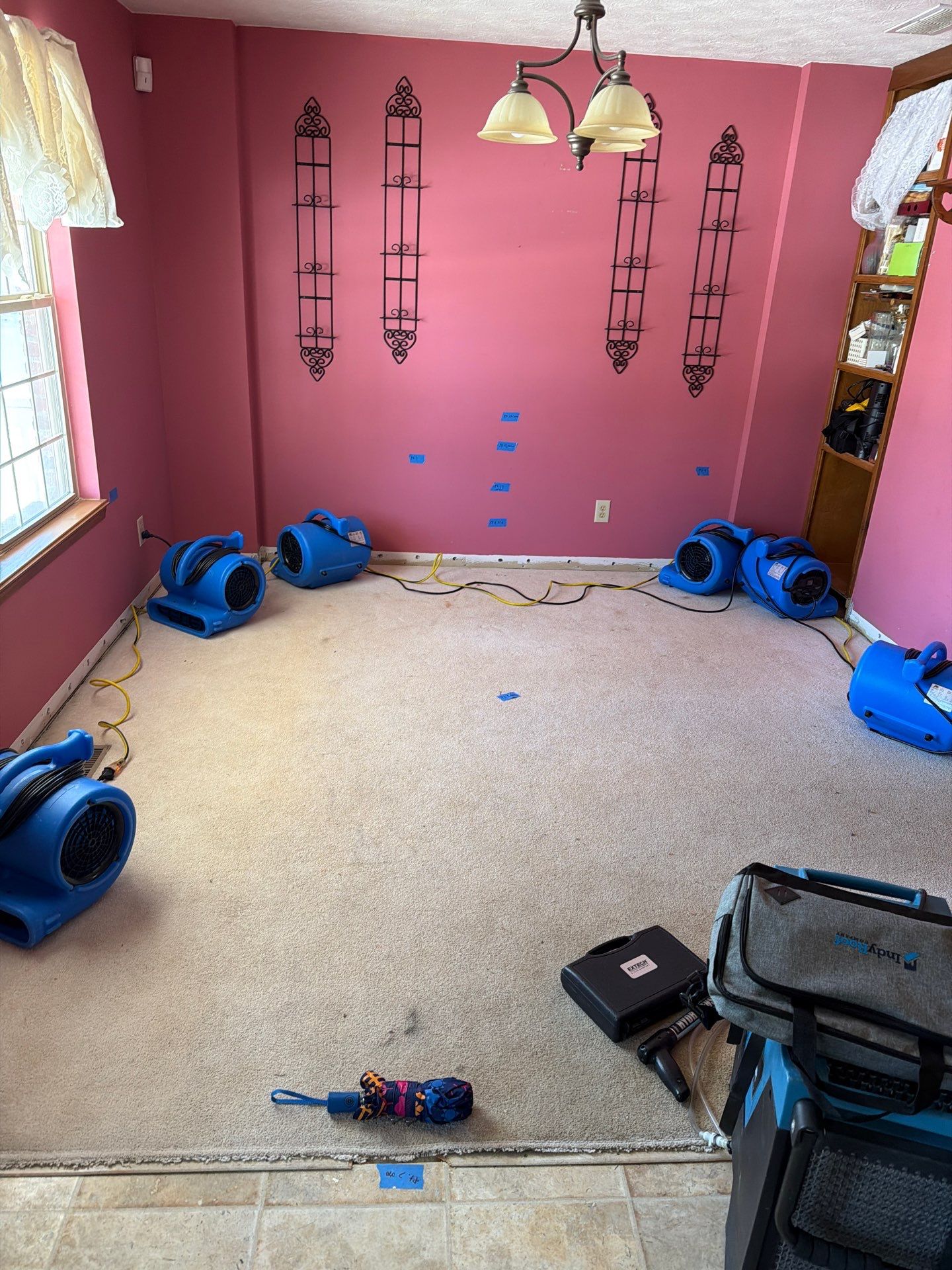
Three to five days is typical for a contained burst in one or two rooms. A whole basement that took on several inches can run seven to ten days. We set air movers and commercial dehumidifiers, monitor moisture readings in wood, drywall, and concrete daily, and pull equipment only when readings match the dry standard for unaffected areas of your Lebanon home. Cutting drying short is the single biggest cause of mold calls we see in March and April, after a January freeze.
Will your homeowners insurance cover a frozen pipe burst?
In most cases, yes. Standard HO-3 policies in Indiana cover sudden and accidental water discharge from plumbing, including frozen pipe ruptures, as long as you took reasonable steps to keep the house heated. That last part matters. If you were out of town for a week with the heat off, the carrier may push back. Document the thermostat setting, take photos of the failure point, and call the claim in within 24 hours. Save receipts for any emergency mitigation. Insurance almost always covers professional water extraction, structural drying, and repair, minus your deductible.
Can you stay in the house during repairs?
Usually yes, if the damage is in a basement, garage, or one isolated room. If primary living spaces are gutted, or if air scrubbers are running 24/7, most families move out for three to seven days. Your insurance policy likely includes loss of use coverage that pays for a hotel or rental during that window. Ask your adjuster for the daily allowance up front so you are not guessing.
How do you prevent the next burst once repairs are done?
Insulate any pipe running through an exterior wall, crawl space, or attic. Keep the thermostat at 60 degrees or higher even when traveling. Open cabinet doors under sinks on bitter cold nights so warm air reaches the lines. Disconnect outdoor hoses every fall and shut off the interior valve feeding the hose bibs. If your Lebanon home has had freeze related issues before, ask a plumber about heat tape on the most vulnerable runs.