LEBANON, IN · Available 24/7 · (765) 978-5086

Washing Machine Flood in Lebanon: Repair Steps

3eb92760 b9b3 476b a727 f99e9d2dc758

You walked into the laundry room expecting to swap a load, and instead you stepped into an inch of water creeping toward the hallway carpet. The supply hose burst, the drain pump failed, or the standpipe backed up while the machine kept pumping. Either way, your washing machine just dumped between fifteen and forty gallons of water onto a floor that was never designed to hold it. If this is happening right now in Lebanon, the most important thing you can do in the next ten minutes is shut off the water supply valves behind the unit, kill power to the laundry circuit at the breaker, and call a restoration team that actually answers the phone. At Lebanon Water Restoration, we have been responding to appliance failures across Central Indiana since 2018, and washing machine floods are one of the calls we run most often. They look manageable on the surface, but the water travels further and faster than homeowners expect, slipping under vinyl planks, wicking up drywall, and saturating the subfloor before you have time to grab a mop. This guide walks you through what to do in the first hour, what professional repair actually involves, what it costs, and how to handle your insurance claim without losing money you should not have to lose.

Step 1: Stop the Water Source Within 60 Seconds

  1. Reach behind the washer and rotate both hot and cold supply valves clockwise until they stop. Quarter-turn lever valves take one motion. Round knob valves take 4 to 6 turns.
  2. If valves are seized or leaking, shut off the main house water supply at the meter or basement riser.
  3. Unplug the washer from the 120V outlet only if the cord and outlet are dry. Do not reach across standing water to a live receptacle.
  4. If water has reached the breaker panel, electrical outlets, or extension cords, flip the main breaker before re-entering the room.
  5. Note the time of shutoff. A 1/2-inch supply hose at 60 PSI discharges roughly 6 gallons per minute, so every minute saved equals one less gallon to extract.

Step 2: Document the Loss for Insurance

  1. Photograph the washer, the burst hose or pump, the water line on the wall, and every affected room. Capture 15 to 25 images minimum.
  2. Record a 60 to 90 second video panning across the damage with audio narration of the time, date, and what failed.
  3. Save the broken supply hose, pump housing, or hose clamp in a bag. Insurance adjusters frequently request the failed component.
  4. Note the washer brand, model, serial number, and age. Machines over 10 years old face different coverage scrutiny.
  5. Pull the purchase receipt or installation invoice if available. Policies often distinguish between sudden failure (covered) and long-term seepage (excluded).
  6. Open a claim within 24 to 48 hours. Most carriers require prompt notice, and a delayed report can reduce the payable scope.

Step 5: Remove Wet Materials by Specification

  1. Baseboards: pull and discard if swelling exceeds 1/16 inch or paint is bubbling.
  2. Drywall: cut a clean horizontal line 2 inches above the visible waterline. Standard practice is a 12-inch or 24-inch flood cut depending on wicking height measured with a pinless moisture meter.
  3. Carpet pad: remove 100 percent in affected rooms. Carpet face fiber may be salvageable if dried within 48 hours.
  4. Cabinet toe kicks: detach and inspect the floor beneath. Particleboard cabinet bases swelling past 1/8 inch are not recoverable.
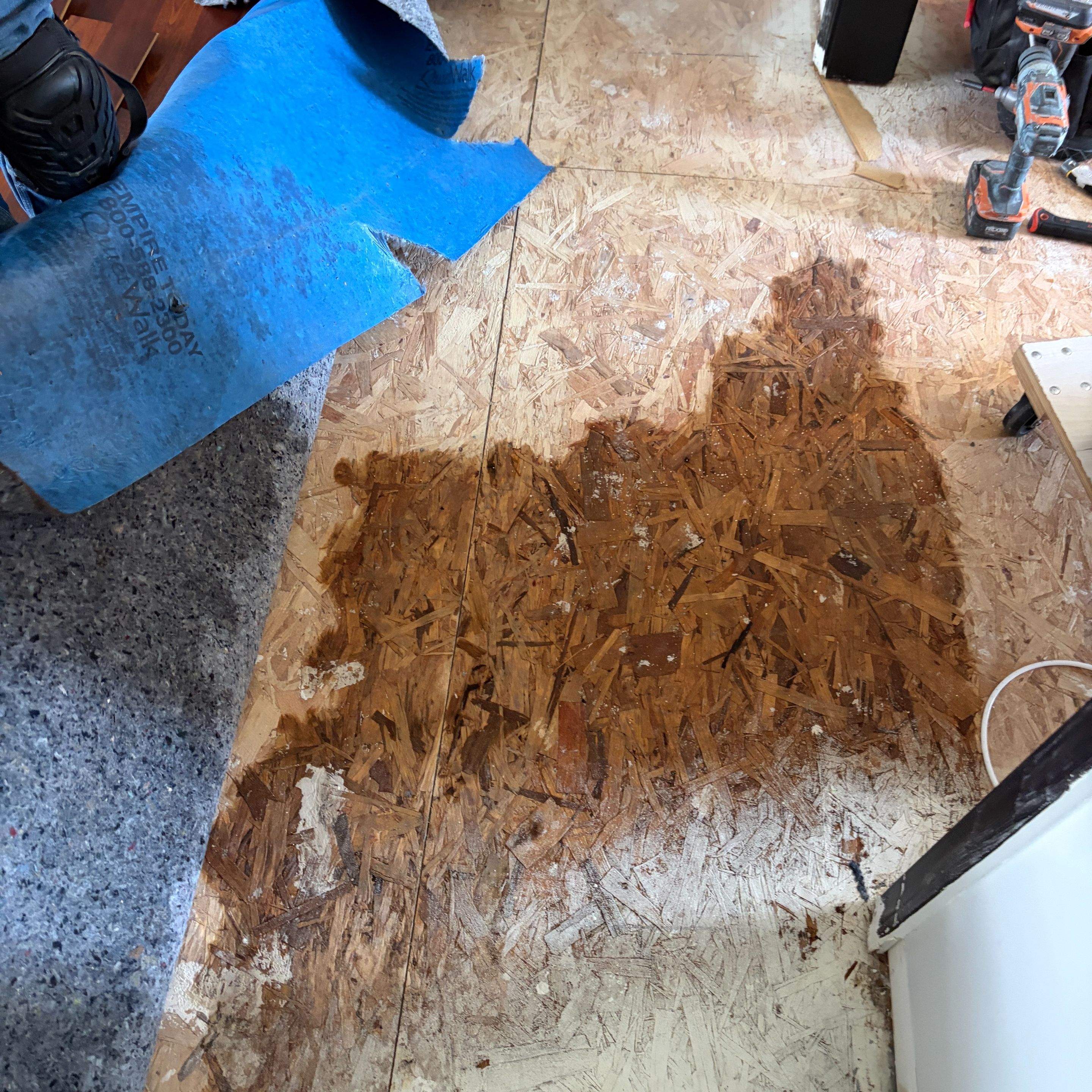
  5. Vinyl plank or laminate: lift the first 2 rows beyond the visible water edge to vent the subfloor.
  6. Insulation: remove all wet fiberglass batt and cellulose. Both compress permanently and lose 40 to 60 percent of R-value once saturated.
  7. Bag and tag debris by room. Photograph each bag before disposal to support the contents claim on your policy.

Step 6: Set the Drying Equipment

  1. Air movers: 1 unit per 10 to 16 linear feet of wall, angled at 15 to 45 degrees to the surface.
  2. Dehumidifiers: 1 LGR (low-grain refrigerant) unit per 1,500 cubic feet of affected space, sized to pull 70 to 130 pints per day.
  3. Target indoor humidity: 30 to 50 percent relative humidity at 70 to 80 degrees Fahrenheit.
  4. Monitor moisture daily. Drywall should reach below 16 percent moisture content. Framing lumber should reach below 19 percent.
  5. Expected drying window: 3 to 5 days for Category 1, 5 to 7 days for Category 2 with antimicrobial application.
  6. Power load: a typical drying setup of 4 air movers and 1 LGR draws 12 to 15 amps. Split across two circuits to avoid tripping a 15-amp breaker.
  7. Keep interior doors open and HVAC running on fan-only to circulate dehumidified air through adjacent dry spaces.

Step 8: Inspect for Hidden Damage

  1. Pull the washer 24 to 30 inches off the wall and inspect the floor beneath. Hidden saturation under the pan is the most commonly missed area.
  2. Check the ceiling of the room directly below if the laundry is on an upper floor. Tap drywall for soft spots and scan with a thermal camera.
  3. Open adjacent base cabinets and look for staining on shared stud bays. Water travels sideways through bottom plates for 6 to 10 feet.
  4. Inspect the standpipe and P-trap for cracks. A failed washer event often masks a pre-existing drain defect that contributed to the overflow.

Step 3: Extract Standing Water Within the First 2 Hours

  1. Use a wet/dry shop vacuum rated for at least 5 gallons. Empty it every 4 to 5 minutes to maintain suction.
  2. Push squeegees toward the lowest floor point or a floor drain. A 6-foot squeegee moves roughly 1 gallon per pass on tile.
  3. For carpet, do not assume the pad is salvageable. Pad absorbs 2 to 3 times its weight in water and almost always requires removal.
  4. If standing water exceeds half an inch across more than 100 square feet, professional truck-mounted extraction is faster and more thorough. Our water extraction services walkthrough covers equipment specs and turnaround windows.
  5. Block doorways and stairwells with rolled towels or weighted plastic to keep water from migrating into adjacent rooms during extraction.

Step 4: Identify the Water Category

  1. Category 1: Clean supply line burst with no contact with soiled surfaces. Treat within 24 hours or it degrades.
  2. Category 2: Drain hose failure, gray wastewater from the wash cycle, detergent residue, fabric lint. Requires antimicrobial treatment.
  3. Category 3: Sewage backflow through the standpipe, or any water that has sat more than 48 hours. Requires containment, PPE, and disposal protocols documented in our sewage backup cleanup guide.
  4. Record the category in writing. Insurance scope and pricing depend on it.
  5. Test pH if uncertain. Detergent-laden water typically reads 9 to 11, useful evidence when classifying a drain hose failure.

Step 7: Apply Antimicrobial Treatment

  1. Use an EPA-registered antimicrobial labeled for water damage remediation. Apply per label dwell time, typically 10 minutes.
  2. Treat the subfloor, wall cavities, and any framing that contacted Category 2 water.
  3. Do not seal cavities until moisture readings confirm dryness on two consecutive daily checks.
  4. Wear nitrile gloves, N95 respirator, and eye protection during application. Ventilate the space for 30 minutes after spraying.

Step 9: Verify, Then Rebuild

  1. Final moisture mapping: document readings at 10 to 20 points across the affected area.
  2. Reinstall drywall, baseboards, paint, and flooring only after sign-off readings are recorded.
  3. Request a written drying log from any contractor you hire. Lebanon Water Restoration provides this as part of every water damage restoration file in Lebanon.
  4. Expect total project timelines of 7 to 14 days for typical single-room floods, 14 to 30 days when the water reached a finished basement or second-floor ceiling.
  5. Replace both supply hoses with stainless-steel braided lines rated to 1,500 PSI before reconnecting the machine. Standard rubber hoses are the failure point in roughly half of laundry floods.
  6. Install a single-lever shutoff valve or an automatic leak detector with a solenoid cutoff. Expect a 90 to 95 percent reduction in repeat-loss risk over 10 years.

Get the Water Out Before the Damage Spreads

A washing machine flood is one of the few water losses where the homeowner has a real window to limit the damage, but that window closes within hours, not days. The faster you get extraction equipment on site and the sooner structural drying begins, the smaller your final bill and the lower your risk of mold remediation later. Lebanon Water Restoration is IICRC certified, BBB A+ rated, and dispatching crews across Lebanon twenty-four hours a day. If you are standing in water right now, stop reading and call us. If you are reading this the morning after and wondering whether the floor is really dry, call us anyway and we will bring meters out to verify. Honest answers, written estimates, no pressure.

Frequently Asked Questions

Does homeowners insurance cover a washing machine flood in Lebanon?

Sudden, accidental failures like a burst supply hose or cracked drain pump are typically covered under standard Lebanon HO-3 policies. Gradual leaks from a worn gasket are often denied as maintenance issues. Lebanon Water Restoration documents the failure point and moisture mapping to support your claim.

How long does it take to dry a washing machine flood?

Most Category 1 losses in Lebanon homes dry in three to four days with proper equipment. Second floor floods that soaked into ceilings below, or Category 2 drain water events, usually run five to seven days including monitoring.

Should I run dehumidifiers myself before Lebanon Water Restoration arrives?

Residential dehumidifiers and box fans help on small spills but cannot keep up with a real washing machine flood. They also push moisture into wall cavities where it causes mold. Extract the standing water, open windows if outdoor humidity is low, and wait for commercial equipment.

What if the flood went through to my ceiling below?

Ceiling involvement changes the scope significantly. We inspect from above and below, check insulation saturation, and often remove a section of drywall to dry the cavity. Trying to dry a saturated ceiling in place risks collapse and hidden mold.

How fast can Lebanon Water Restoration respond to a washing machine flood in Lebanon?

Our standard target is 60 to 90 minutes from call to on site for active water emergencies in the Lebanon service area. Dispatch runs 24/7, and the first truck carries extraction equipment so work begins immediately on arrival.