Commercial Storm Damage in Lebanon, IN
In Lebanon, wet inventory gets moved first and every reading gets logged for your property policy file.
For Commercial Storm Damage in Lebanon, Lebanon Water Restoration brings the equipment, the certifications, and the paperwork: 24/7 response, written scopes, and insurance claim support. Call (765) 978-5086 for dispatch.
- Service: Commercial Storm Damage for Lebanon homeowners
- Service area: Lebanon, IN and surrounding areas
- Response time: Emergency calls from Lebanon dispatched immediately, day or night
- Licensed and insured (License #RC21100059)
- Serving Lebanon, IN since 2018
Commercial Storm Damage Cleanup in Lebanon
We'll secure and dry commercial buildings in Lebanon after a storm opens the roof or floods a lower level.
Storms Here
Spring and summer are severe thunderstorm season here. Large hail and damaging wind can hit here, and that puts roofs and rooftop equipment at risk. NWS Indianapolis posts summaries of past storms, which helps when your carrier asks for a date.
We respond to storm calls from businesses anywhere in Lebanon, including those around Ulen Country Club and Lebanon Public Library. We also handle commercial storm damage in Frankfort, Thorntown, Zionsville and Whitestown.
Commercial Storm Damage for Lebanon Businesses
During a downpour the roof drains can't keep up, and the overflow goes wherever the piping sends it. Water backs up an interior leader and escapes at a joint above the ceiling, then lands in the corridor below. Lebanon Water Restoration pulls that water out of your Lebanon building and dries the chase the leader runs through, with the water's category set by what it picked up on the way.
Lebanon Water Restoration handles the ceiling and finish rebuild once the drying log says it can. Grid gets releveled, new lay in tile goes in, insulation is replaced to the assembly's original value and painted surfaces get finished to a clean line. You approve the rebuild scope in writing, and a punch walk with the property manager closes it out in your Lebanon building.
Above a suspended ceiling is where most commercial storm water ends up sitting. Lebanon Water Restoration crews pull the wet lay in tile, bag the saturated batt or blanket insulation, and get air moving across the deck and the underside of the structure. Readings come off the gypsum and the deck itself, because dry tile over a wet deck just moves the problem a month out.
Lebanon Water Restoration builds the mitigation package in the format commercial adjusters work in, with an itemized scope, photo documentation by location, daily moisture and humidity logs, an equipment inventory with hours and a floor plan marked with the affected areas. You and your broker decide how to use it with your carrier, and the team answers questions in writing with you copied.
Lebanon Water Restoration takes commercial storm intrusion calls in Lebanon and across Boone County around the clock. Bring the floor plan if you've got one and the crew will mark it up while they map moisture. The moisture map is yours to hand to ownership.
Signs You Need Commercial Storm Damage Restoration
If you notice any of these in your Lebanon building, schedule a free inspection before the issue worsens.
Daylight visible through a roof penetration curb or around the flashing at a rooftop unit
Interior glazing sealant that's cracked, pulled loose, or missing along a run of joints
Paint blistering or wall covering bubbling on a wall that backs up to the exterior
Carpet tile that squishes underfoot along the glass line of a storefront or window wall
Tenants moving stock or equipment away from a wall because water keeps showing up there
Corrosion on a fire sprinkler line or head where the pipe runs close to the roof deck
Rust streaks or white efflorescence running down an interior wall below a parapet line
Metal door frames rusting at the base, with the gypsum board around them swelling
Wet or stained carpet along an interior column line with no plumbing fixture anywhere near it
Water beading on the inside of curtain wall mullions or collecting on the sill
How Lebanon Water Restoration Handles Commercial Storm Damage
We follow these steps in order on every Lebanon job.
Power and Safety Walk
Before extraction starts, the crew walks the wet areas with your building engineer and confirms which circuits serve them. Cords run through ground fault protection, and the electrician decides what can be reenergized.
Occupied Space Planning
Suites and corridors that must stay in service get marked on the plan before any equipment is staged, along with where the barriers go. The loud work is scheduled for hours when the space is empty.
Dry Standard Verified
Affected materials have to match the dry standard measured in an unaffected part of the same building before equipment comes out. Final readings, photos and equipment run hours go in the file, and a punch walk sets what's left to rebuild.
Ceiling and Finish Rebuild
Grid gets releveled, new lay in tile goes in, and insulation is replaced to the assembly's original value. Painted surfaces get primed and finished to a line that reads as original, and flooring goes back once slab readings allow it.
Closeout File and Walkthrough
A walkthrough with the property manager closes the job, and the crew hands over one organized file with the photos, the readings, the equipment run hours and the scope. Ownership and the carrier's reviewer can read it start to finish.
Commercial Storm Damage in Lebanon
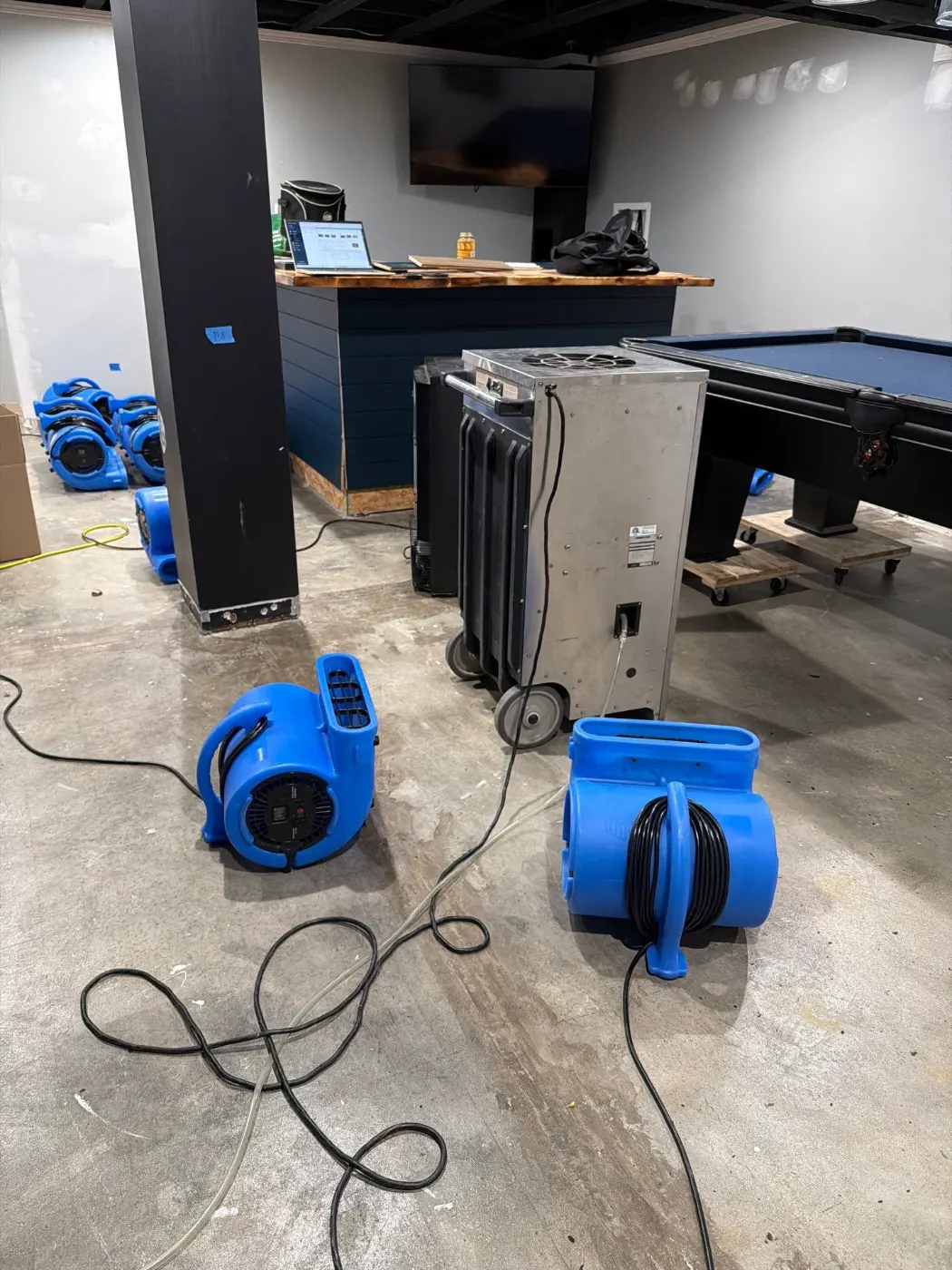
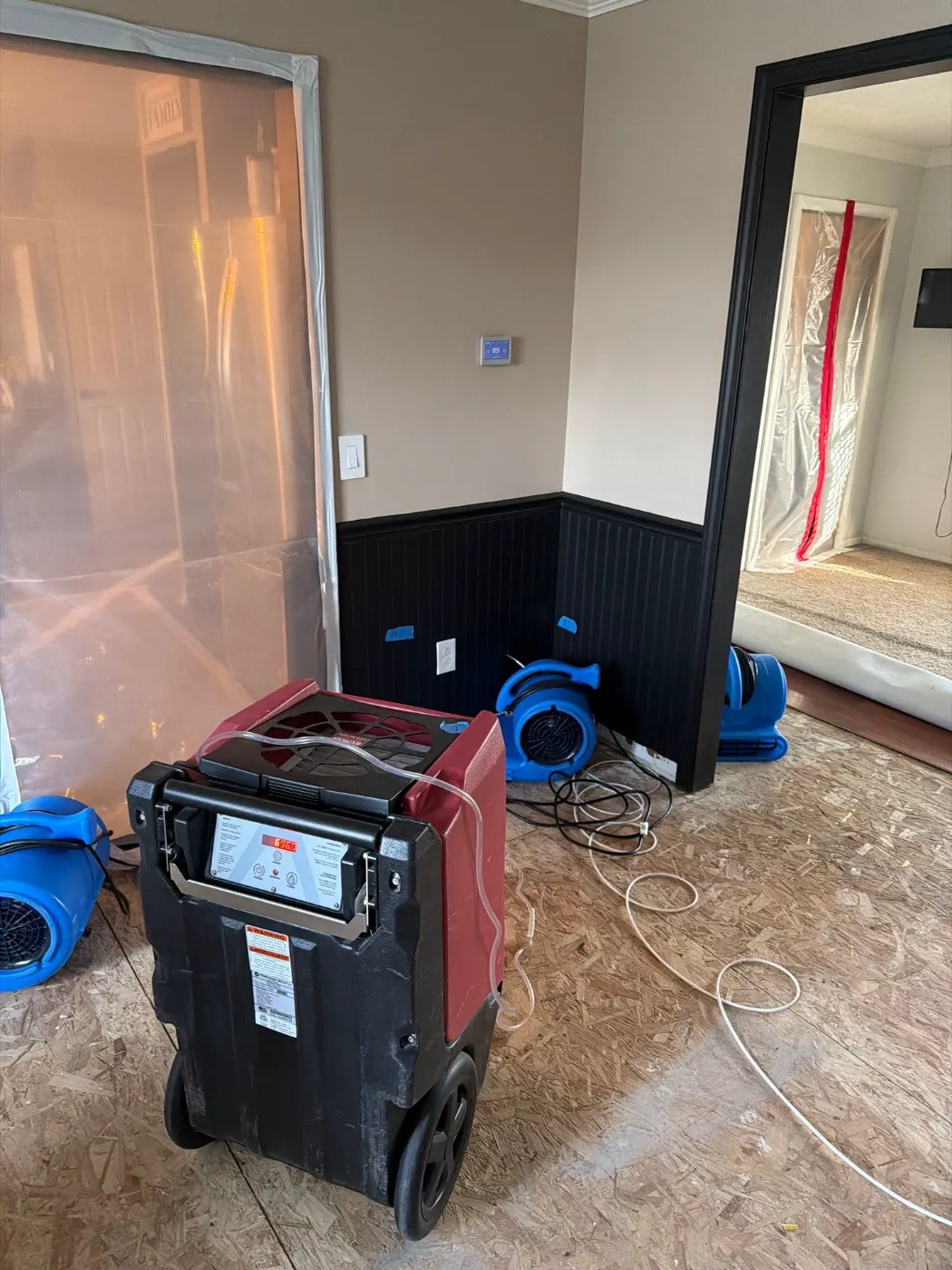
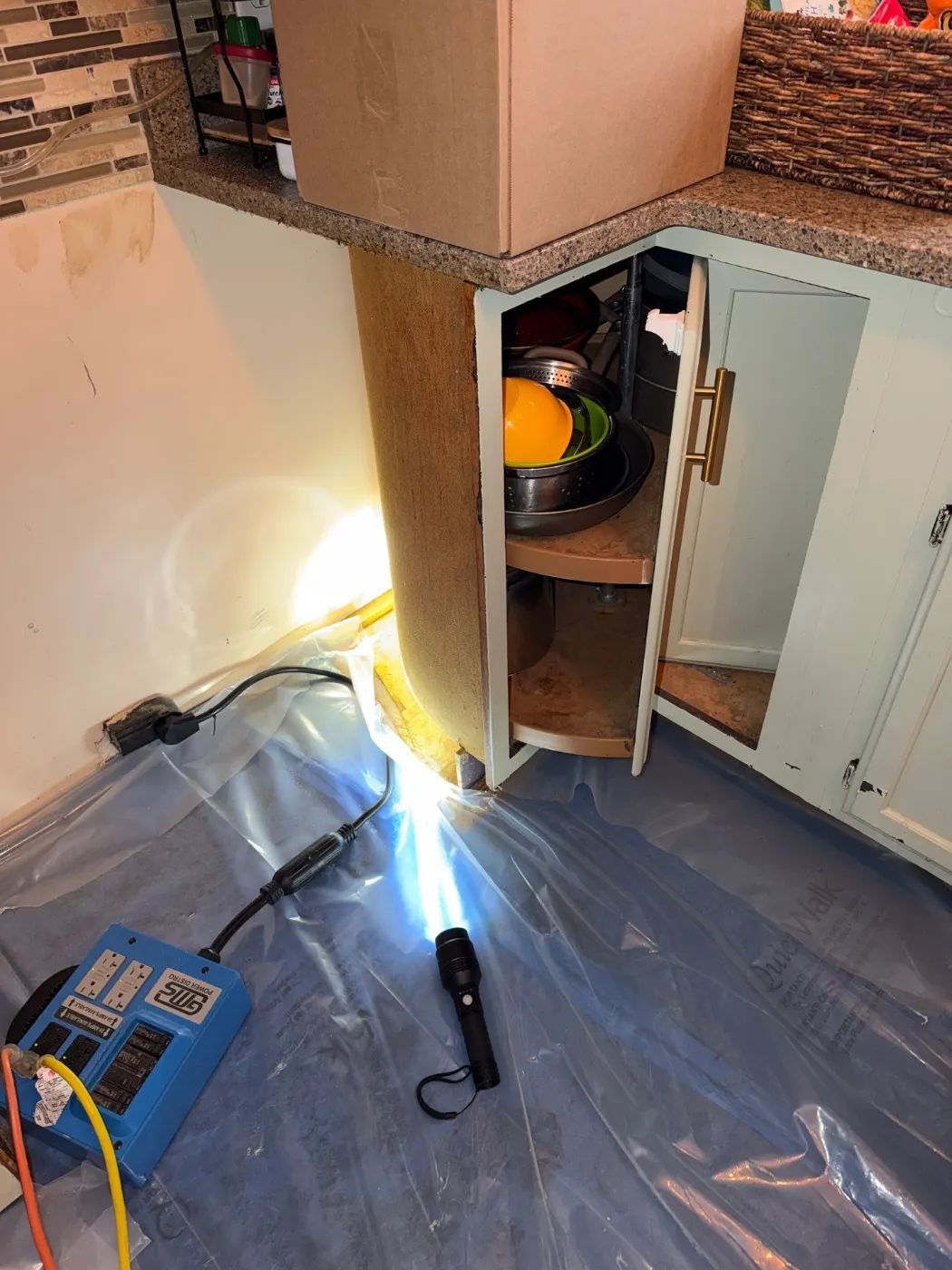
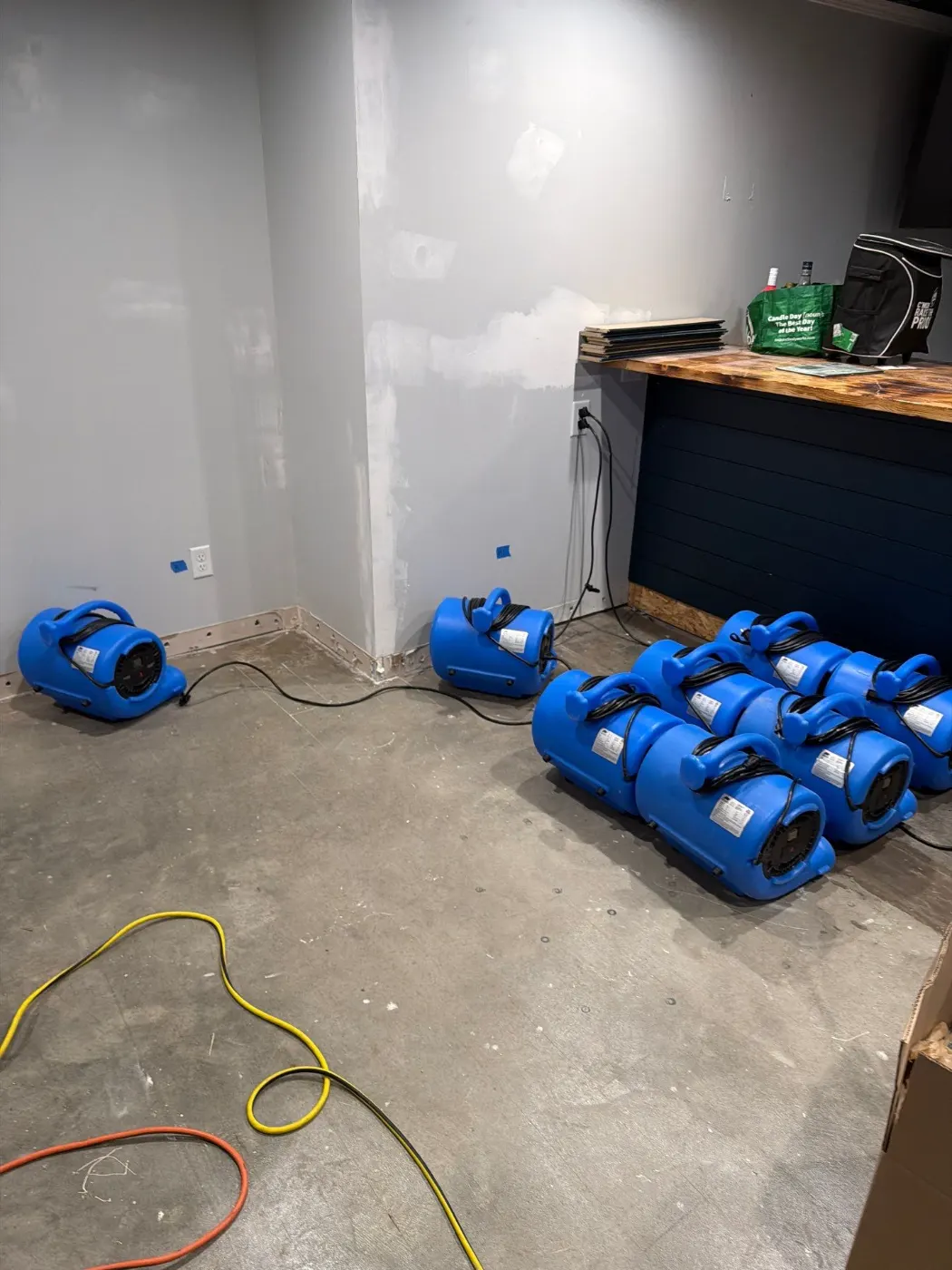
Photographs from real commercial storm damage jobs completed by our crew in Lebanon and surrounding areas.
Commercial Storm Damage FAQ
Questions Lebanon property managers ask us about commercial storm damage restoration.
Guidance and Standards for Commercial Storm Damage
- The National Weather Service office in Indianapolis posts summaries of recent central Indiana storm and flood events. NWS Indianapolis Event Summaries
- The ANSI/IICRC S500 is the published standard for professional water damage restoration. The current edition is the Fifth Edition, 2021. IICRC S500 Standard
Lebanon Neighborhoods We Serve
We take commercial storm damage calls in every part of Lebanon. Pick your neighborhood for local details.
Other Restoration Services in Lebanon
Lebanon Water Restoration handles the full scope of restoration work. Explore our other services below.
Water Damage Restoration in Lebanon
24/7 emergency response. IICRC certified water restoration from extraction to full dry out.
Learn more →Basement Flooding in Lebanon
Basement water emergencies handled fast. Extraction, drying, mold prevention.
Learn more →Sewage Cleanup in Lebanon
Category 3 biohazard cleanup. Full containment, decontamination, structural restoration.
Learn more →Request Commercial Storm Damage Restoration
Reach Us Directly
Our team is available 24/7 for emergencies and ready to schedule inspections during business hours.
Need Immediate Help?
For active water or mold emergencies, call us directly. We are available 24/7.